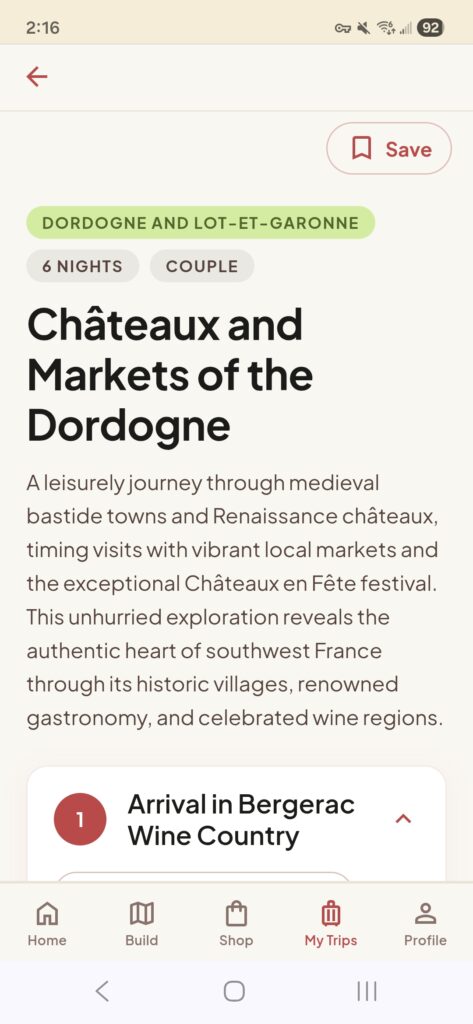
Six days in the Dordogne is enough time to understand why people come here once and spend years trying to get back. It is not enough time to see everything, but it is the right length for a trip that moves at the Dordogne’s own pace: unhurried, grounded in local life, anchored by exceptional food and wine, and structured around the markets and festivals that make this corner of southwest France unlike anywhere else in Europe.
This is what a well-planned 6-day Dordogne itinerary looks like in practice, built around medieval bastide villages, the Châteaux en Fête festival, and the wine regions of Bergerac and Saint-Émilion.
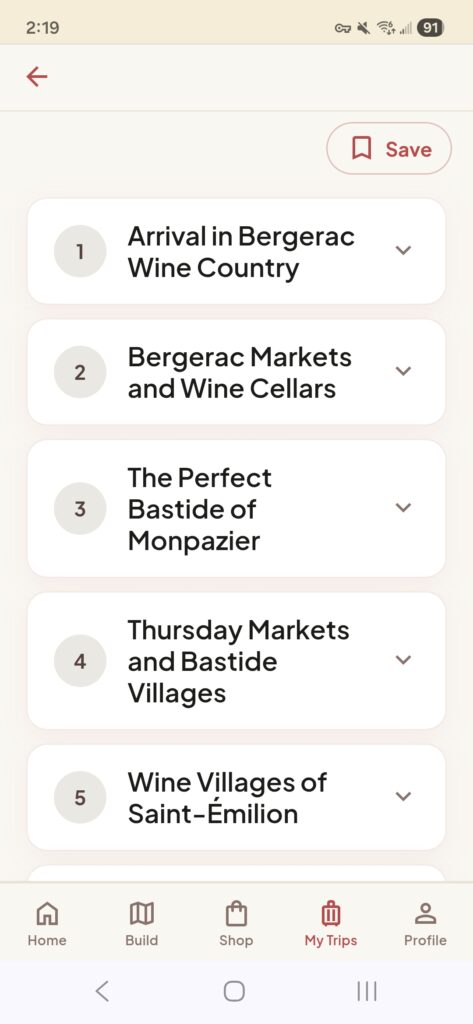
Your 6-Day Dordogne Itinerary at a Glance
- Day 1: Arrive Bordeaux, drive to Bergerac, evening in the old town
- Day 2: Bergerac Wednesday market, Château de Monbazillac, wine tastings
- Day 3: Monpazier bastide village, Château de Biron
- Day 4: Thursday markets at Monpazier and Monflanquin, Lot-et-Garonne countryside
- Day 5: Saint-Émilion, the Monolithic Church, château wine experiences
- Day 6: Libourne Saturday market, return to Bordeaux
Who This Dordogne Itinerary Is For
This route suits couples and pairs travelling with their own, or hired, car a moderate-to-comfortable budget, and a genuine interest in history, wine, and local food culture. It is not a highlights rush. Each base has at least two nights, which allows proper exploration rather than a sequence of half-days. If you are interested in what the Dordogne actually feels like to travel through rather than a checklist of famous viewpoints, this itinerary is built for you.
For more context on the region before you travel, our Dordogne travel guides covers the essentials.
Day 1: Arriving in Bergerac Wine Country
Most international visitors fly into Bordeaux, or arrive by train, and the drive southeast to Bergerac takes around ninety minutes through vineyards and limestone countryside that sets the tone immediately. Arrive in the mid-afternoon and you have time to check in, walk the Dordogne riverfront, and be seated for dinner before nine.
Bergerac’s old quarter is compact and handsome: half-timbered houses, narrow medieval streets, a river that moves slowly enough to make standing beside it feel like a reasonable use of time. Book dinner at L’Imparfait for your first taste of Périgord cuisine. Duck, foie gras, Bergerac wines: the regional cooking is confident and generous, and this is the right place to begin.
Stay: Bergerac old town centre
Day 2: The Wednesday Market and Château de Monbazillac
The Wednesday market at Bergerac is one of the most authentic in the Dordogne. Local producers fill the covered halls and surrounding streets with fresh walnuts, seasonal vegetables, artisanal cheeses, and goose products that represent the region’s food culture far more honestly than any restaurant menu. Arrive early for the best selection and the most interesting conversation.
Before the market, spend thirty minutes at the Maison des Vins to orient yourself among Bergerac’s twelve wine appellations. The region produces serious dry whites and reds that remain largely undiscovered by international buyers, as well as the golden Monbazillac dessert wines that are the afternoon’s main event.
Château de Monbazillac sits among its vineyards a short drive south of town. The 16th-century castle is impressive in any season, but if your dates coincide with the Châteaux en Fête festival, the experience is exceptional: extended cellar tours, older vintages open for tasting, and access to areas that remain closed during regular visits. Monbazillac’s noble rot wines rival Sauternes in complexity and arrive at a considerably lower price, which is either a well-kept secret or simply something the wine world has not caught up with yet.
Market day: Wednesday
Don’t miss: Châteaux en Fête programme at Monbazillac
Stay: Bergerac
Day 3: Monpazier, France’s Most Perfect Bastide
Edward I of England founded Monpazier in 1284 on a precise rectangular grid, and the town has barely changed since. Enter through one of the original gateways, walk to the central arcaded square, and observe that the 13th-century grain measures are still in place in the covered market hall. The honey-coloured stone, the geometric order, the deep shade of the Gothic arcades: Monpazier is the most complete medieval bastide in France and justifies its reputation completely.
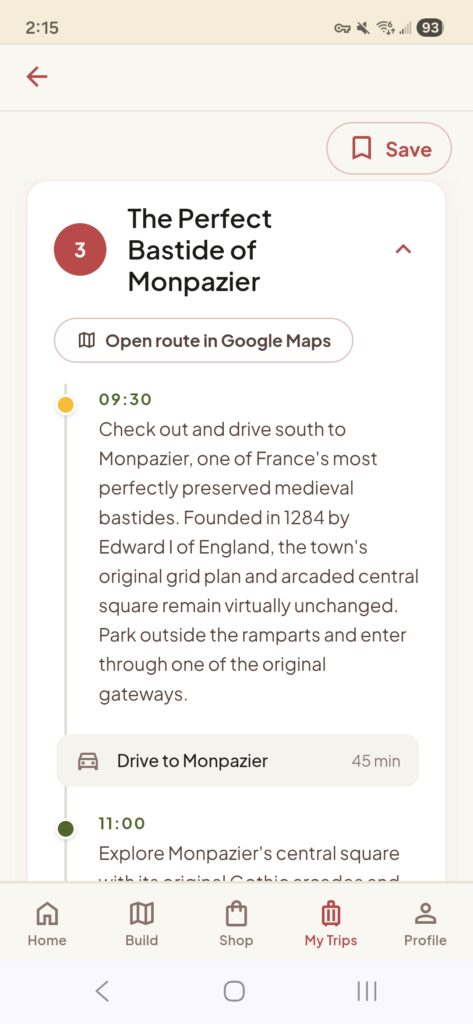
The drive from Bergerac takes forty-five minutes and passes through the rolling southern Périgord countryside. Spend the morning in the town itself before driving to Château de Biron in the afternoon. The fortress dominates its hilltop with the assurance of seven centuries of continuous occupation, and the Châteaux en Fête programme brings access to sections that are otherwise closed, along with period demonstrations that illuminate rather than parody the history.
Return to Monpazier for the evening. The town changes character when day visitors leave, and a quiet walk along the remaining sections of the ramparts in late light is one of the better things a 6-day Dordogne itinerary can offer.
Drive from Bergerac: 45 minutes
Stay: Monpazier
Day 4: Thursday Markets and the Lot-et-Garonne Countryside
Thursday morning begins with Monpazier’s own market in the central square: local farmers and artisans setting up under medieval arcades exactly as they have for centuries. The market is modest in scale and completely genuine, specialising in the seasonal produce and goose products that define the local food economy.
A twenty-five minute drive south brings you to Monflanquin for its Thursday market. This hilltop bastide in Lot-et-Garonne offers some of the best views in the region over the Lot valley, and its central square holds its own against Monpazier’s for medieval character and atmosphere. The Musée des Bastides here explains clearly why these planned towns were built: strategic and economic instruments in the long contest between English and French forces for control of the border country. The context makes the subsequent afternoon drive through the Dropt valley significantly more interesting.
Market days: Both Monpazier and Monflanquin hold Thursday markets
Stay: Monpazier
Day 5: Saint-Émilion and the Wine Villages
The drive northwest from Monpazier to Saint-Émilion takes seventy-five minutes and crosses several distinct landscapes before the Gironde’s vineyard-covered hills take over and the UNESCO World Heritage site announces itself in the distance. The bell tower of the Monolithic Church, the golden limestone terraces descending among the vines: Saint-Émilion looks exactly as it should look, and it does not disappoint on arrival.
Climb to the top of the Tour du Roy for the full panorama before descending into the steep medieval streets. Wine shops and galleries line every level. The underground Monolithic Church, carved from solid rock in the 12th century, is one of the most remarkable spaces in southwest France: cool, vast, carved from living rock, and worth the guided tour over independent exploration.
For the afternoon, choose a château participating in the Châteaux en Fête programme. Several Saint-Émilion properties use the festival to open older vintages and offer cellar access that would not otherwise be available. This is an afternoon that tends to become a reference point for wine experiences that follow.
Drive from Monpazier: 75 minutes
Stay: Saint-Émilion
Day 6: Libourne’s Saturday Market and Departure
The final morning belongs to Libourne’s Saturday market, one of the largest and most authentic in the region. The covered halls and surrounding streets offer last-minute opportunities to purchase Saint-Émilion wines, regional cheeses, preserves, and artisanal products. The market has the energy of a working French town on a Saturday rather than a tourist attraction, which makes it a fitting conclusion to the trip.
The drive back to Bordeaux Saint-Jean takes fifty minutes through the Bordeaux wine region. Return the car with enough time to find a seat somewhere good before the train.
Market day: Saturday
Drive to Bordeaux: 50 minutes via Libourne
Practical Information for Planning 6 Days in the Dordogne
Getting there: Bordeaux Saint-Jean connects to Paris Montparnasse by TGV in two hours. Bergerac Airport (EGC) offers direct flights from several UK cities including London Stansted and Birmingham.
Getting around: A car is essential for this itinerary. Most drives are under one hour between destinations, roads are quiet, and parking is available at all the bastide villages. Collect your car at Bordeaux Saint-Jean on arrival.
Best time to visit: May, June, and September offer the best combination of good weather, open markets, and manageable visitor numbers. The Châteaux en Fête festival typically runs over a June weekend: confirm dates for the current year before booking.
Budget: This itinerary is calibrated for a moderate budget, with well-regarded local restaurants, independent hotels, and authentic regional experiences. Expect to spend between €150 and €200 per couple per day including accommodation, meals, and château entry fees.
Frequently Asked Questions About the Dordogne
Is 6 days enough time in the Dordogne?
Six days is enough to explore the southern Dordogne and neighbouring Lot-et-Garonne thoroughly without feeling rushed. It allows two nights in three different bases, which is the minimum needed to properly experience each area. A longer stay of nine or ten days would allow you to add the Vézère valley and the Lascaux cave paintings to the north.
Do you need a car in the Dordogne?
Yes. Public transport between the bastide villages and château sites is extremely limited. A car gives you the flexibility that the region requires, and the rural roads between destinations are part of the pleasure of travelling here.
When is the best time to visit the Dordogne?
Late spring and early autumn offer the best conditions: warm weather, active markets, open restaurants, and fewer visitors than July and August. June is particularly good if your dates coincide with the Châteaux en Fête festival.
What is the Dordogne known for?
The Dordogne is known for its medieval bastide villages, prehistoric cave paintings, foie gras and duck-based cuisine, Bergerac wines, and one of the highest concentrations of classified châteaux in France. The combination of exceptional food, history, and landscape makes it one of the most rewarding regions in the country for independent travel.
Can you visit Saint-Émilion from the Dordogne?
Yes. Saint-Émilion is technically in the Gironde department but sits within easy reach of the southern Dordogne. The drive from Monpazier takes approximately seventy-five minutes, making it a natural inclusion in a Dordogne itinerary that ends at Bordeaux.
Build Your Own Dordogne Itinerary
This itinerary was planned using the Wander in France Voyageur mobile app, the travel planning tool built specifically for southwest France. Voyageur builds personalised day-by-day itineraries timed around local markets, seasonal events, and festival programmes — for the Dordogne and eleven other regions across southwest France.